
7 episodes

Building a Power Company for the Next 50 Years | Zach Dell, Base Power
David Senra interviews Base Power co-founder Zach Dell about building an energy company to make electricity affordable and reliable. Dell says the grid is too small, as AI drives demand growth from 2% to 10% a year, and Base's fix is owning home batteries as a fleet—charging when power is cheap, discharging when expensive, providing backup—so customers pay 1/20th to 1/40th of owning one outright. He explains the counterposition—selling electricity, not batteries; 10-year megawatts-as-a-service deals for utilities like CoServe; and a compounding cost advantage via vertical integration and Base's custom battery, the Base Core. He covers the 'Dad Terminal' with Michael Dell, ex-SpaceX lessons, and Base's habits: monthly updates, North Stars, dashboards, a turtle marking the critical path.Sep 6, 2026 · 1:16:20 · 23K views
How to Dominate for Decades | Doug Leone, Sequoia Capital
Doug Leone, who led Sequoia Capital for 26 years, tells David Senra he dominates through fear of irrelevance, and at 69 he is again a 'low-level analyst' racing to understand an AI revolution he calls more radical than anything he has seen. His investment tests are whether he would put his kids' money in, whether it is one of 20 lifetime investments, and whether it can return the whole fund — he wants only 100x outliers and says the biggest venture mistake is selling winners early, citing Sequoia's 20% of NVIDIA and 10% of Google. He recounts backing David Vélez before Nubank existed, Fred Luddy's ServiceNow pitch, and seeking founders who are hypercompetitive with a heart of gold. He advises founders to architect boards like products and to avoid 'completely fucking clueless' investors.Aug 30, 2026 · 1:22:18 · 101K views
Building Defense Technologies to Protect Democracies | Torsten Reil, Helsing
Torsten Reil, co-founder of European defense-tech company Helsing, argues that AI-controlled drones and autonomous fighter jets are making tanks, artillery, and crewed aircraft obsolete, and that future conflicts will be battles of materiel won by whoever can mass-produce weapons. Citing Ukraine, he says drones have cut frontline survival times to minutes, and explains how Helsing's HX-2 strike drone scaled from dozens to a baseline of 1,000 units per month, surging to 3,000. He also reveals that Helsing's Centaur AI flew a Saab Gripen in air combat, leading the company to build the autonomous jet CA1 Europa. Reil discusses founding Helsing in 2021 to protect democracies, Daniel Ek's early 100-million-euro investment, and the talent-density philosophy that shapes his leadership.Aug 26, 2026 · 1:23:55 · 11K views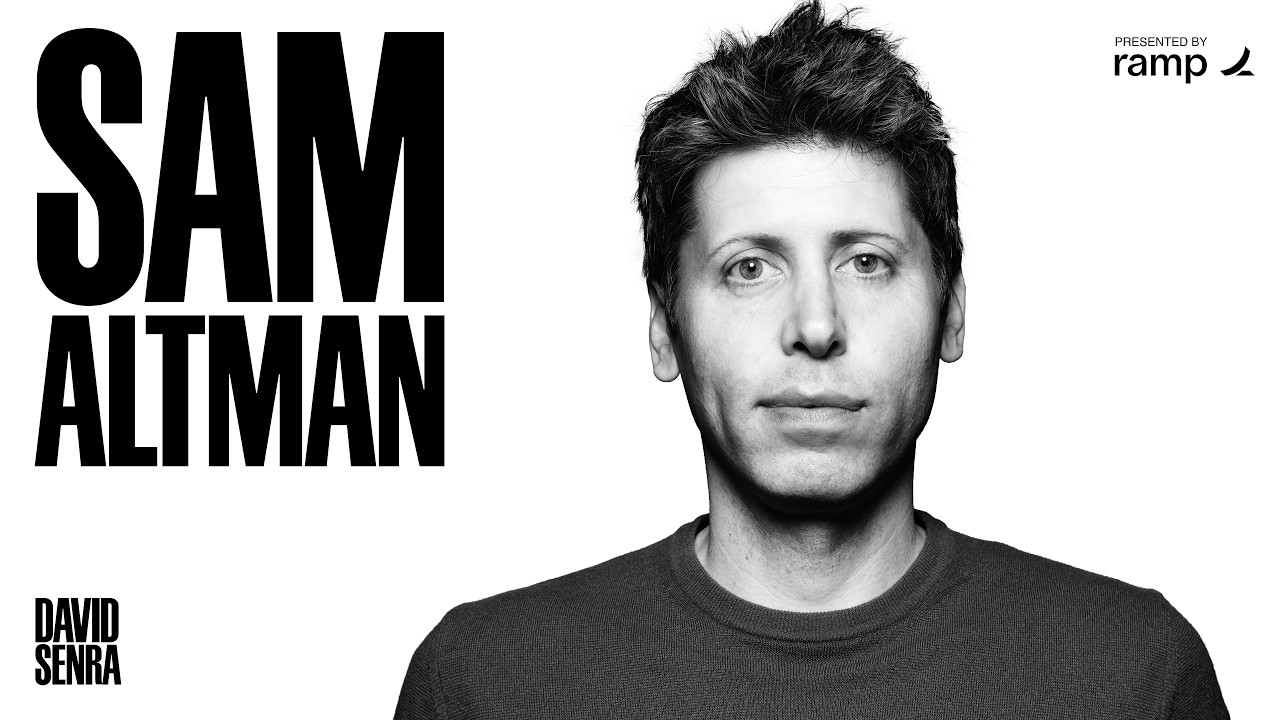
Sam Altman on Building OpenAI & Betting on the Impossible
Sam Altman, CEO of OpenAI, tells David Senra that AI capabilities will outpace society's ability to adapt, and that human connection becomes more valuable as AI improves. Altman cites Shopify CEO Tobi Lütke as the most forward-leaning CEO because he builds with AI himself. He explains OpenAI's platform strategy—one interface, one API—which meant killing Sora and Atlas to focus on general intelligence. He credits Y Combinator's iterative philosophy for making OpenAI possible, even though OpenAI broke the playbook by going four and a half years without shipping a product. He also recalls the first day at Greg Brockman's apartment and says he learns more from successes than failures.Aug 23, 2026 · 1:18:17 · 181K views
Excellence Is the Capacity To Take Pain | Travis Kalanick, Founder of Uber
Travis Kalanick, founder of Uber and now Atoms, tells David Senra why he is drawn to impossibly hard problems. He recounts Uber's China war against Didi, saying he convinced regulators that progress must be in harmony with stability, and explains his fundraising auction process—starting low, running multiple rooms, building demand curves—versus Benchmark's 'war room' against him. Kalanick also describes running Uber with a 'starve next week' intensity after years of no salary at Red Swoosh, and his management philosophy: fewest possible rules, like mandatory pricing calls before launching cities. His current company, Atoms, applies that to specialized robotics for food, mining, and transport, aiming to digitize the physical world one industry at a time.Aug 16, 2026 · 1:48:55 · 125K views
DHH: How to Build a Profitable Company Without Losing Control
David Heinemeier Hansson (DHH) argues that constraints, not resources, are the key to building great software, and that independence from investors and customers is the ultimate freedom. He built the first version of Basecamp in just 380 hours working 10 hours a week, and credits that shortage of time for the product's quality. His marketing strategy, borrowed from Kathy Sierra, is to out-teach competitors rather than out-spend them, a principle he has applied for two decades. DHH explains why he distrusts unlimited resources—they lead to bloat—and how he applies a ruthless edit to both writing and product features. He recounts giving Jeff Bezos an absurdly high term sheet in 2005, which Bezos accepted, giving him and Jason Fried the confidence to reject all other venture capital. Most recently, he created Omachi, a Linux distribution built for himself with no customers, calling it a retirement from capitalism. He also describes how Tobi Lütke nudged him into embracing AI, and how Mark Andreessen provided crucial support during 37signals' 2021 internal crisis over workplace politics.Jul 26, 2026 · 1:41:40 · 86K views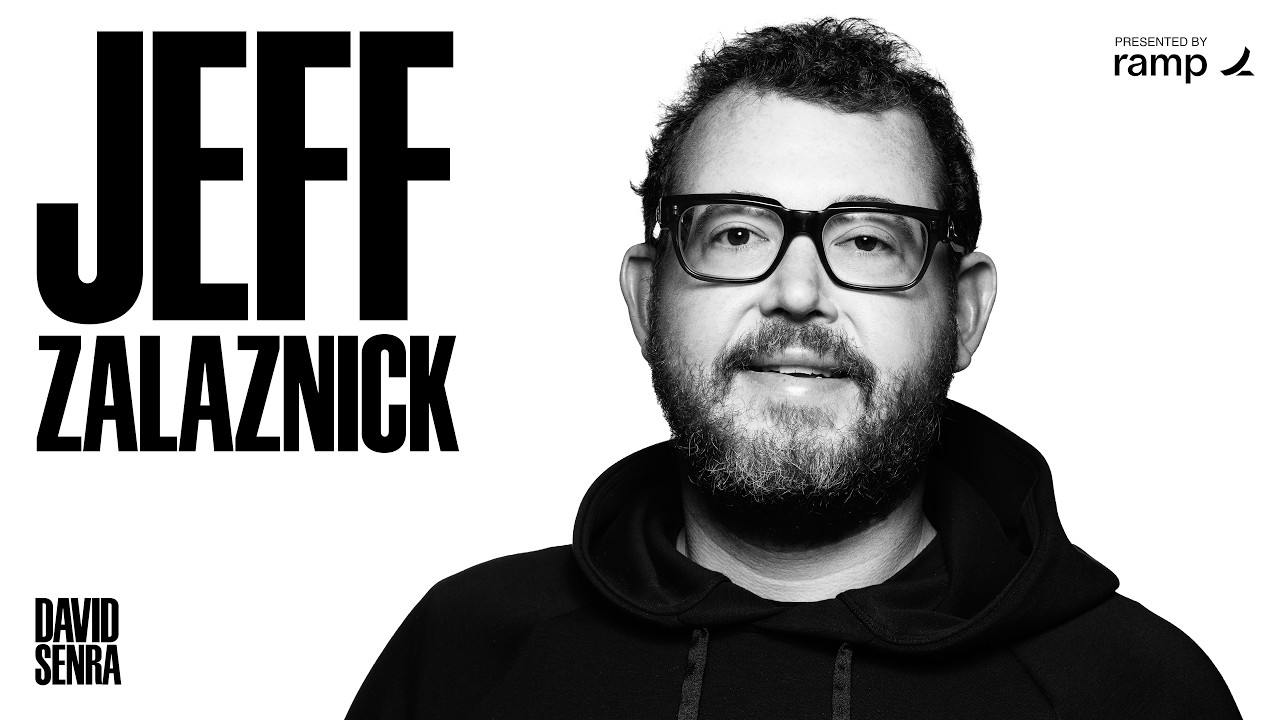
The Restaurant Genius Behind Carbone, ZZ’s, Torrisi & More | Jeff Zalaznick
Jeff Zalaznick, co-founder of Major Food Group behind Carbone, ZZ's, and The Pool, explains how his lifelong obsession with food led him from a J.P. Morgan analyst job to building 77 restaurants (76 still profitable). He details the $40 million restoration of The Pool—the only interior landmark restaurant in America—and the counterintuitive decision to close lunch to make The Grill a dinner destination. Zalaznick articulates the company's thesis: take something everyone loves and make the best version ever done, exemplified by Carbone's 70-item menu and spicy rigatoni vodka. He describes finding partners Mario Carbone and Rich Torrisi after being blown away by their food at Torrisi, and the story of Carbone's iconic neon sign, broken by the previous owner but retained. The episode covers their expansion into private members clubs (ZZ's) with subscription models and a culinary concierge, and their rapid Miami growth—opening Carbone on Collins in 100 days without moving a single wall, achieving over $30 million in annual revenue. Zalaznick also shares their move into hotels, branded residential towers, and even Carbone tomato sauce sold in thousands of stores.Jul 19, 2026 · 1:47:56 · 51K viewsDavid Senra interviews Base Power co-founder Zach Dell about building an energy company to make electricity affordable and reliable. Dell says the grid is too small, as AI drives demand growth from 2% to 10% a year, and Base's fix is owning home batteries as a fleet—charging when power is cheap, discharging when expensive, providing backup—so customers pay 1/20th to 1/40th of owning one outright. He explains the counterposition—selling electricity, not batteries; 10-year megawatts-as-a-service deals for utilities like CoServe; and a compounding cost advantage via vertical integration and Base's custom battery, the Base Core. He covers the 'Dad Terminal' with Michael Dell, ex-SpaceX lessons, and Base's habits: monthly updates, North Stars, dashboards, a turtle marking the critical path.
Zach Dell is the co-founder of Base Power, an energy company on a mission to make electricity more affordable and reliable. His starting insight was that home batteries had the wrong business model. Companies sold expensive backup systems that sat idle most of the time. Base installs batteries at homes, retains ownership and operates them as a fleet: charging when electricity is cheap, discharging when it is expensive and providing backup when the grid goes down. The homeowner gets lower electricity bills and backup power. Base gets an asset it can put to work every day. Dell explains why batteries can make the existing grid more efficient, why installing them where people consume electricity helps overcome infrastructure bottlenecks and how Base serves both homeowners and utilities. His strategy is to build a compounding cost advantage through vertical integration and technology. That now includes Base Core, a battery designed and manufactured by the company, and a longer-term ambition to help meet the growing power demands of AI. Dell grew up watching his father, Michael Dell, build a company and knew from childhood that he wanted to become an entrepreneur. After several early ventures failed, he went into investing to study what makes a great business. He describes the “Dad Terminal”—ongoing conversations with his father about strategy, operations and the problems in front of them—and the lessons Base has adopted from former SpaceX employees. Engineers and manufacturing teams work close together, and the entire company organizes around a few clearly defined goals. He also explains the operating habits behind Base: monthly written updates, visible performance dashboards and a physical turtle placed on the desk of the person responsible for resolving a critical bottleneck. He keeps separate notebooks for working in the business and working on it, setting aside time each night to think on paper without distractions. He discusses building a beloved brand in energy, why his co-founder conversations focus on what is going wrong and why Base is his last company. His ambition is a lifelong effort to make, move, store and sell electricity more affordably and reliably. Show notes: https://www.davidsenra.com/zach-dell Made possible by Ramp: https://ramp.com AppLovin: https://applovin.com/senra Deel: https://deel.com/senra David Senra Website: https://www.davidsenra.com X: https://x.com/davidsenra Instagram: https://www.instagram.com/davidsenra LinkedIn: https://www.linkedin.com/in/davidsenra Facebook: https://www.linkedin.com/company/senrashow Threads: https://www.threads.com/@davidsenra Spotify: https://spti.fi/TVrr557 Apple Podcasts: https://apple.co/4msoZtb Zach Dell Base Power: https://www.basepowercompany.com X: https://x.com/zachbdell LinkedIn: https://www.linkedin.com/in/zach-dell-a631a554 Chapters 00:00:00 Energy Abundance & the Power Demands of AI 00:06:15 How Batteries Make the Grid More Efficient 00:09:09 Early Ventures & the Insight Behind Base 00:15:34 We Don’t Sell Batteries. We Sell Electricity. 00:22:25 How Base Works With Utilities & Competes for Customers 00:30:44 Learning From Michael Dell: The “Dad Terminal” 00:32:22 Vertical Integration & Lessons From SpaceX 00:39:34 Writing Clearly & Making Time to Think 00:44:53 North Stars, Turtles & Relentless Execution 00:53:55 Learning From Great Founders & Building a Beloved Brand 00:56:27 What’s Your Constraint? 01:06:26 Base Core & Taking Control of Manufacturing 01:11:02 A Lifelong Mission & the Last Company He’ll Build